Categories
Library & Technology

Community Outreach

Libraries serve an important purpose in our local communities. They have always done this, but time made the library complacent to some people because access to information is so easy. Google is the most popular search engine, but this is nothing less of what we consider the 21st century. The library still represents a place where information is shared which is more than just books. They also fulfill a fundamental goal of bringing communities together especially in the wake of a disaster. In recent developments, I observed a movement of sharing information on all social media platforms, promoting e-resources from a number of libraries world-wide. Since the The World Health Organization (WHO) declared a global pandemic on March 11, 2020 for COVID-19, libraries have incorporated many ideas to captivate their audience to provide services that can accommodate the people as the world remains vigilant adhering to the restrictions implemented by authorities. However, while some are able to access e-resources, there are some persons unable to do so, because they may not have access to a computer with internet. This is why some libraries thought out of the box, and came to a decision that they needed to reach the wider community, capturing that particular audience.

One country in particular is Finland, when the country implemented emergency law around March 11, 2020, according to their website, to fight the COVID-19 epidemic. The country’s libraries found new ways to cater to their customers. Authorities are offering pick-up facilities, expanding the e-book catalog, a ‘book in a bag’ service and even sharing book recommendations on Instagram live. This is highlighted through Library Journal’s twitter account that report on library views, news, and book reviews from library staffers which outlines the following;

picture taken from Library Journal Twitter account
  1. Bookstores in the municipalities of Salla in Lapland and Kuhmo in Eastern Finland are offering a ‘book in a bag’ service through which library staff pack requested books in a bag and customers can pick it up at an agreed time.

2. A similar service is being considered in Helsinki — the only difference being that they are giving away books that are marked to be removed from the library catalogue.

3. Turku city library has taken to social media to offer an insta-live service where librarians’ answer customers’ questions and provide book recommendations on weekday mornings.

This type of outreach reminds us of the fundamental purpose of public libraries by bringing communities together, providing and going beyond the call of sharing information. This outreach will definitely help these communities cope with the unexpected and to feel some sort of normalcy to an extent.

Categories
Library & Technology

How about Story-time, virtually?

Have you ever imagined, experiencing the transformation of using technology and live streams to conduct story-time for the children, while they are home during this time of pandemic – COVID-19? Of course we have seen all the public announcements safeguarding ourselves by social distancing. In libraries today, it represents more than just books. It also represents a place that people can interact with technology through the “digital labs” that may be set up in your local library. One of the activities that librarians facilitate for the children is storytelling, however – virtually! Hence the reason libraries are coming up with innovative ways to bring a sense of normalcy to patrons, including offering video story time.  A few examples are listed below to represent how much libraries have taken up this initiative to capture the attention of the children at home during this time of pandemic – COVID-19.

  1. Kingston Libraries
Photo Courtesy: Twitter

2. Sylvan Lake Library

Photo Courtesy: Twitter https://twitter.com/SylvanLib

3. NOLA Public Library

4. Southington Public Library

The Southington Public Library has made videos of Molly Virello, a children’s librarian, reading books before the coronavirus pandemic as a project for the American Library Association and the Specialized Cooperative Library Association. She called the project “Storytime Anytime.”

Video Courtesy: YouTube https://www.youtube.com/watch?v=d0-je-uCjNU
Categories
Library & Technology

The call to “Digitize”!

In the height of a worldwide pandemic, organizations including libraries and learning institutions, are recognizing that e-resources are becoming more prominent. As everyone is restricted by social distancing which includes nearly everywhere, the more this situation resonates the need for online services. Some libraries, which includes all libraries, be it public, academic or special libraries are promoting that they are going through a digitisation process to make their collections available to their clients in this time of crisis. This process includes scanning of historical publications. For example the library and archive at the Australian National Botanic Gardens – the national collection of Australian native plants; inspiring, informing and connecting people with the Australian flora has announced that they are going through this process making its collections more accessible by digitising the historical publications as part of its 50th anniversary celebrations.

Crop Photo by: V. Sosa supplied by Twitter to illustrate parks Australia announcement

Another example of a library that has incorporated a digitising project is the British Library. Their initiative incorporates Cyreal – a digitisation company for a project approximately for two years along with imaging specialists at the Library have developed bespoke equipment to photograph and digitise the globes, which form one of the most beautiful but fragile subsets in the British Library’s vast maps collection. The digital globes will be available to view on the British Library website – www.bl.uk/collection-items – from 26 March, via a viewing platform which includes an augmented reality function (available on phone or tablet via the Sketchfab app). This online access will allow unprecedented up-close interaction with the globes from anywhere in the world and means that for the first time, a variety of previously illegible surface features on the globes can be read.

Photo Courtesy: artdaily – British Library makes rarely seen historical globes available for up-close, augmented reality viewing

In light of the situation, schools are also struggling with the new situation – virtual school. Heads of Schools all over the Czech Republic are tasked with the challenge of coping with distance learning. Some of the schools in the Czech Republic are doing well, but the majority of schools here don’t know where to start with building a virtual environment for their students. Virtual teaching is not a challenge for the American Academy system of schools.  American Academy has been using Google Classroom and other fitting virtual school applications on a daily basis in order to give its students the best possible education with limitless options for learning. While this project is in its initial stages, many schools have already been reached out for assistance.  This educational initiative is just the start of something bigger with potentially helping all schools to become more digitized.

Video supplied by Youtube for American Academy

Let us be apart of this initiative in becoming more digital! You can start with your own personal records, receipts, letters, statements, birth papers, passports etc.

Categories
Library & Technology

Innovative Hubs

The Digital Lab

This image has an empty alt attribute; its file name is the-public-library-in-thionville-is-an-example-how-libraries-evolve-in-digital-times-540x540-1.jpg
The public library in Thionville is an example how libraries evolve in digital times / Images: Dominique Coulon and Associates

Libraries of the Future

Digital libraries are much more than easy access to literature and information, they are dwellings that expand our possibility to store books and read them in the unpredictable territory that words demand. And although the book as an object remains unbeatable, when reading on a screen, a phone or a tablet we are simply repeating one of the most beautiful human activities: enlightening our brains igniting out imaginations all-in-one space for learning, consuming, sharing, creating, and experiencing. Some libraries have 3D printers and other cutting-edge tools that makes them not just places of learning, but creation. 

Another element of technology in the library, is the access and use of digital repositories and databases. For example, NALIS, a public library located in Trinidad and Tobago has a digital library which has a collection of digital resources highlighting the people, places, lifestyle, culture and events surrounding these twin islands.

Click on link to view digital library in NALIS

Libraries have evolved into more digital repositories to enable users the ease of access to online databases or online public access catalog (OPAC). 

This image has an empty alt attribute; its file name is nalis-opac.jpg
Photo: National Library and Information System Authority (NALIS), Port of Spain,Trinidad and Tobago, W. I.

An example of OPAC database services offered to users.

Email : nalis@nalis.gov.tt

In addition to this, they have also extended their services by supplying a username and password via search.ebscohost.com

Picture taken from NALIS twitter account

Categories
Library & Technology

Digital Lab in the Library

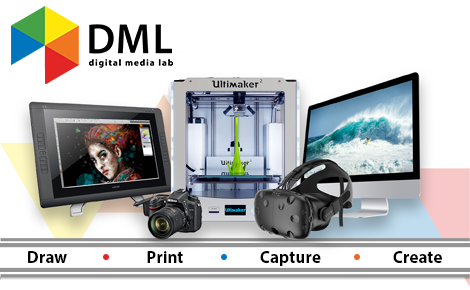
Image result for digital media labs

Digital media labs are popping up at several public libraries across the globe. Having a clear idea of how patrons might use your lab to meet their personal and professional goals will help drive your logistics and daily operations by giving access to large amounts of information to users wherever they are and whenever they need it. It includes the basic equipment and software patrons need for graphic design, digital photography, audio and video recording, and more. Public libraries exist mainly to encourage innovation, creativity, and lifelong learning, and many individuals simply lack the means to acquire the equipment and software needed to learn skills for digital content creation. Resources like public digital media labs could go a long way toward providing those opportunities and bridging economic divides. In addition to this, it also provides access to primary information sources as well. The Digital Lab will engage patrons in a wide range of activities and projects which include the following:

Transferring VHS tape to DVD

Recording an instructional video segment for a local business

Drawing Manga using a tablet and illustration software

Laying down beats, recording original vocals, then uploading the song to Soundcloud

Creating an original model to make with a 3D printer

Scanning pictures and creating a slideshow to celebrate a personal milestone

Repairing a damaged photo, then surprising a loved one with a high-quality print of the restored version

Recording a podcast

Programming a robot to complete a task

Designing an invitation

Editing a video and sharing it on YouTube

Earning a filmmaking badge as part of a scouting program

Photographing products for an online store promotion

Rehearsing with a band for an upcoming musical performance

Examples of the use of Digital Labs

Photo Courtesy: Shoestring Digital Media Lab. Patrons using the library to record a song.
Photo Courtesy: iPad Storytime @CarmelLib Carmel Clay Public Library, Indiana
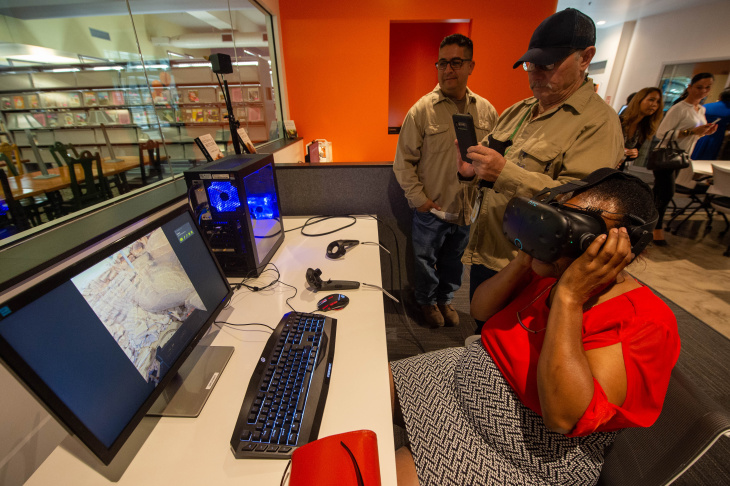
Using equipment in the L.A. Public Library’s new Octavia Lab. (Gary Leonard for LAPL)
Image result for digital labs in libraries
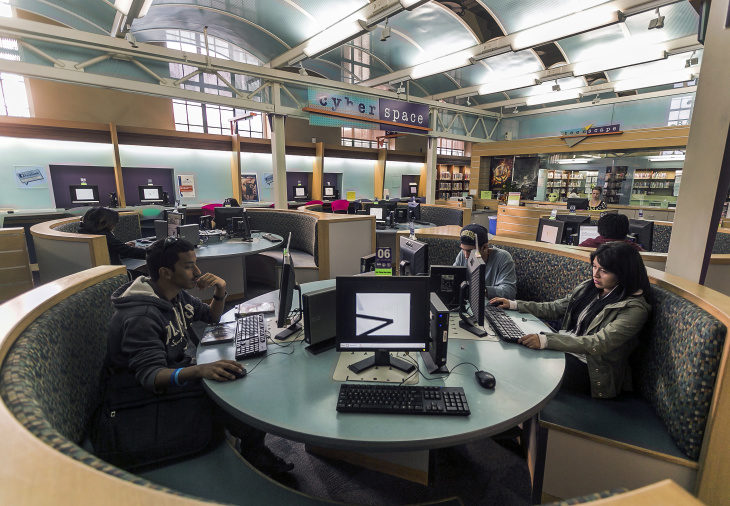
Patrons use computers in the Teen’Scape area at the Los Angeles Public Library. (Damian Dovarganes/AP)
hill-media-lab-01.jpg
NC State University Libraries – Patron using the scanner to save his document as a PDF
Public Library 3d printer program
Middleton Media Maker Lab – Picture showing a 3d printer coming to the Digital Lab

Design a site like this with WordPress.com
Get started